









Why a Calendar
We publish standalone maintenance posts (our 5 essential maintenance tips, the fall cleanup checklist, the winter care guide, the summer cooling playbook) — but nobody has time to re-read all of them each season.
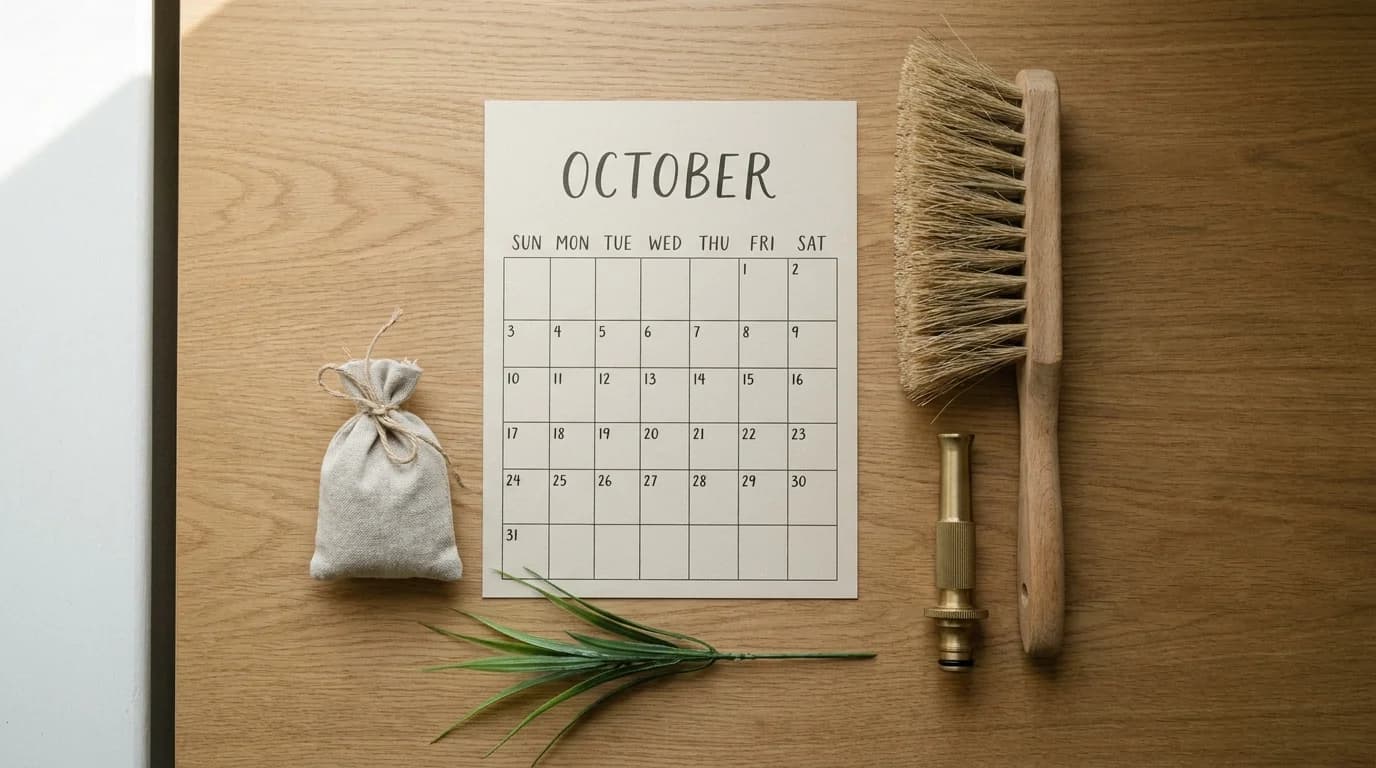
This is the one calendar that captures the whole year. Print it, pin it, forget about it. If you follow the monthly tasks below, your turf will outlast its 16-year warranty.
January
- Light inspection — walk the yard, look for ice damage, lifted seams, standing water
- Snow removal (if needed) — plastic shovels only, no metal, no rock salt (see winter care)
- No power broom — fibers are stiffer in cold, risk of damage
February
- Monthly rinse (if above 40°F) — pet areas especially
- Enzyme cleaner (pet owners) — on the warmest day of the month
- Order spring materials — if you're planning a top-off, sample order, or additions (order samples)
March
- Full inspection — perimeter, seams, drainage, infill levels
- Power broom — first full session of the year, light pressure
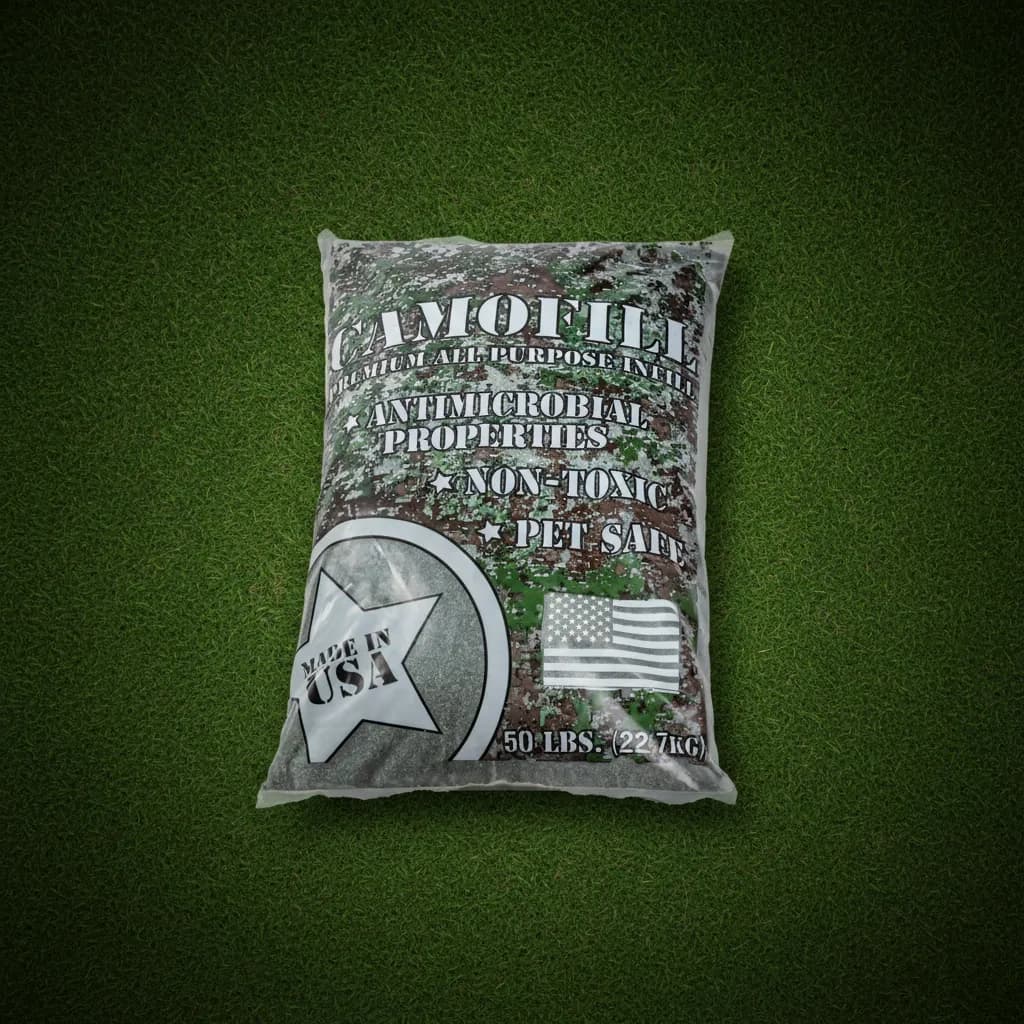
- Top off infill — add silica or ZeoFill where needed (see infill guide)
- Pet area deep clean — enzyme cleaner + full rinse
April
- Weed check — walk the perimeter, pull any new sprouts
- Pest check — treat ants or weed invasions at edges
- Rinse pollen weekly — spring pollen season peaks for many regions
Spring is also planning season for new installs. See our spring install timeline if you're adding a section.
May
- Power broom high-traffic zones — gates, dog runs, under swings
- Check shock pads (if applicable) — kids' play zones (see kid-safe guide)
- Pre-summer rinse — flush accumulated spring pollen out of the fiber base
June
- Mist before heavy use — 30-second hose spray drops surface temp 30–50°F (see summer heat post)
- Shade cover setup — pergolas, umbrellas, shade sails over high-use zones
- Pool-area rinse (poolside owners) — chlorine and salt flushing (see poolside turf post)
July
- Weekly rinse — pollen, dust, pet accidents
- Enzyme cleaner (pet owners) — mid-month deep clean
- Spot-check for sun damage — reflected sunlight burns from windows (see repair guide)
August
- Full inspection — mid-year equivalent of the March walk
- Infill top-up where traffic has displaced it
- Power broom field — reset the pile across the whole yard
- Pre-fall seam check — temperature changes approaching
September
- Fall cleanup prep — brush all debris, flush the surface (see fall cleanup post)
- Weed perimeter walk — fall is a weed-seed-dispersal peak
- Pet-area deep clean — before winter weather limits enzyme performance
October
- Leaf blow (weekly if trees nearby) — cordless blower, lowest setting
- Acorn and pine cone sweep
- Final infill top-off before winter
- Perimeter re-nail if needed — contraction with cooling temps
November
- Full fall cleanup — leaves, debris, rinse, final power broom
- Pre-winter inspection — anything that needs attention before snow hits
- Pet-area rinse — last comfortable-weather deep clean
December
- Minimal activity — turf care takes a holiday
- Snow prep (if applicable) — stage plastic shovel, confirm no rock salt in garage
- Holiday use — fire pit on stone pad, no cigarette butts on turf (see holiday entertaining post)
Monthly Rhythms by Climate
Hot climates (Phoenix, Miami, Austin): Shift pollen-rinse season to Feb–April, mist all summer through October.
Cold climates (Denver, Northeast): Compress the active-maintenance season (April–October), extend winter dormancy.
Pacific NW (Seattle, Portland): Add a wet-season rinse every 6 weeks October–March to prevent moss buildup (see shaded yards post).
The Tools You'll Need Over the Year
- Garden hose with nozzle
- Stiff bristle push broom
- Power broom (rent 1–2× per year)
- Cordless leaf blower
- Enzyme cleaner (if pets)
- Silica sand or ZeoFill (annual top-up)
- Plastic snow shovel (cold-climate owners)
The Turfgrass Producers International publishes equipment-selection guides that cross over usefully to synthetic turf care.
When Pro Help Makes Sense
Most of this is DIY — a weekend a quarter is plenty. If you want someone else to run the calendar:
- Many lawn-care companies now offer "turf maintenance" subscriptions (quarterly visits)
- Our installer network can refer local providers
- Costs typically run $150–300/visit for a residential yard
Print and Pin
Print this post, pin it to the inside of a garage cabinet or shed door, check off the month as you go. The 20-year lifespan is yours to keep.