
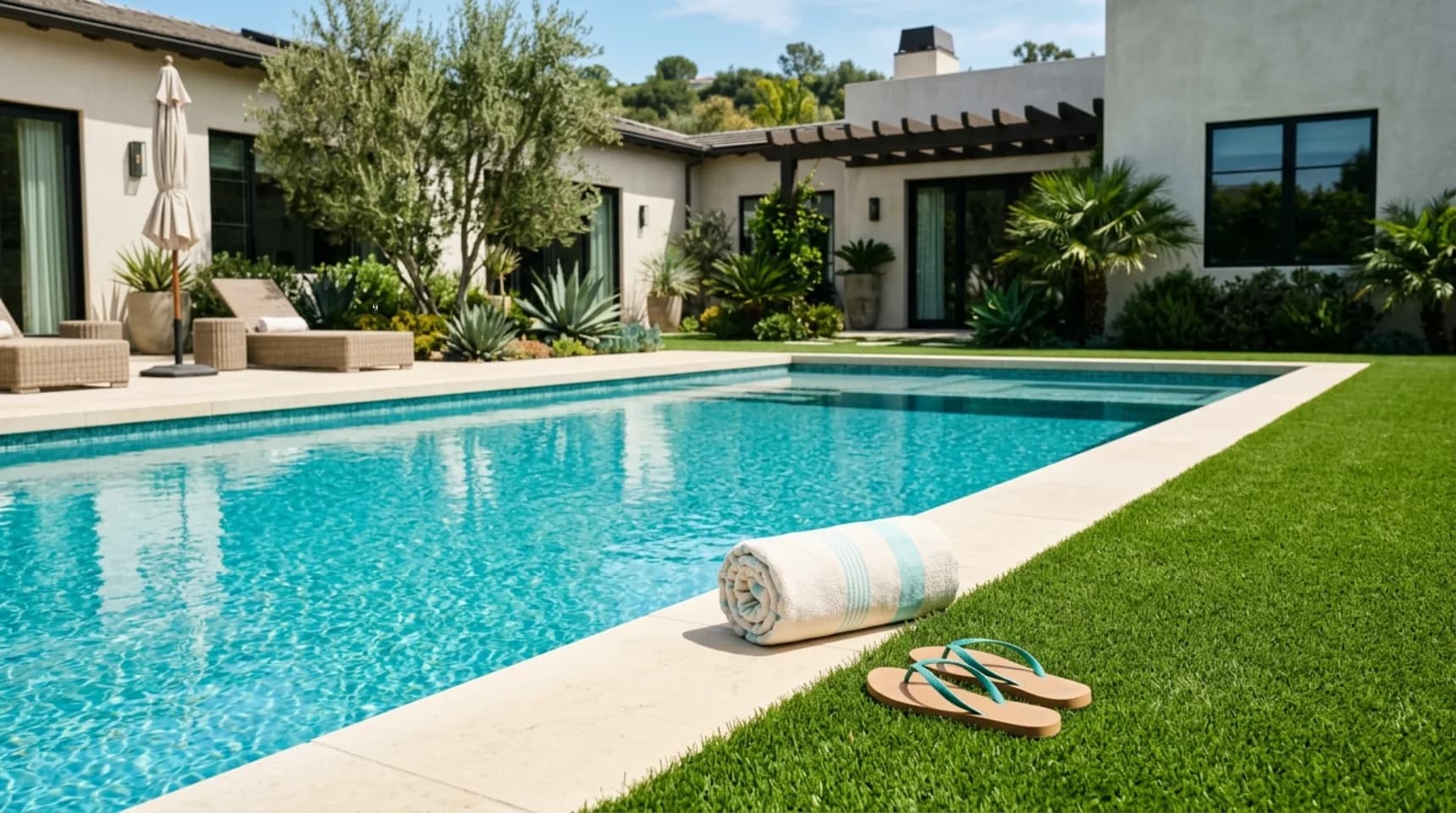

Why Turf Is Winning Around Pools
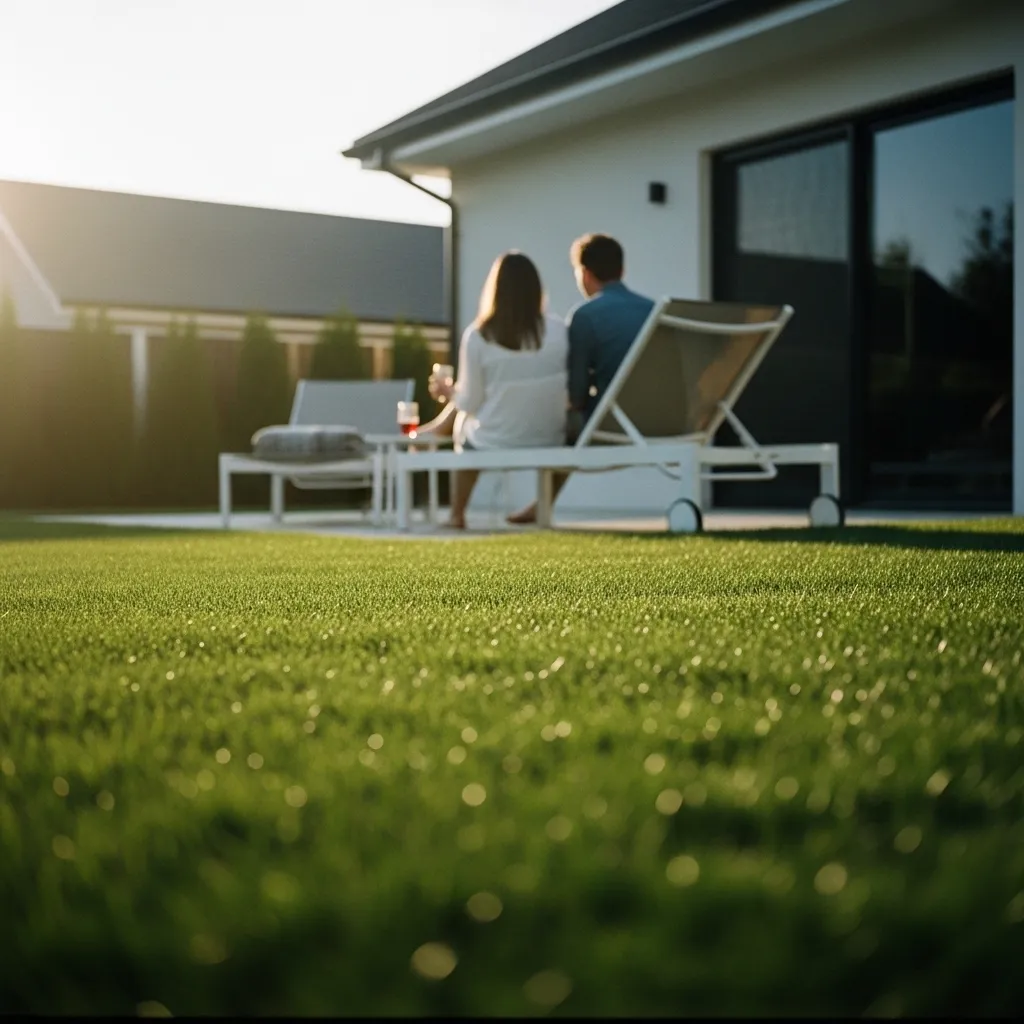
Grass around a pool is a losing battle. Chlorine kills it in patches. Salt from saltwater pools sterilizes the soil. Wet foot traffic tracks mud back into the house. Constant mowing means slipping on wet clippings.
Artificial turf solves all of it — but only if you spec the right product for the chemistry involved.
Chlorine and Salt Compatibility
Modern polyethylene turf blades are essentially chemically inert. Chlorinated pool water won't degrade them. UV rating is more important than chlorine rating, because sunlight breaks down cheap yarns faster than any pool chemistry will.
Look for:
- UV stability: 3,000+ hours (ASTM G154 accelerated weathering) — the ASTM G154 standard is the industry benchmark
- Chlorine resistance: all major manufacturers spec this, but confirm the datasheet mentions it
- Salt-pool tolerance: upgrade to UV-stabilized polyethylene (not polypropylene) for saltwater pools
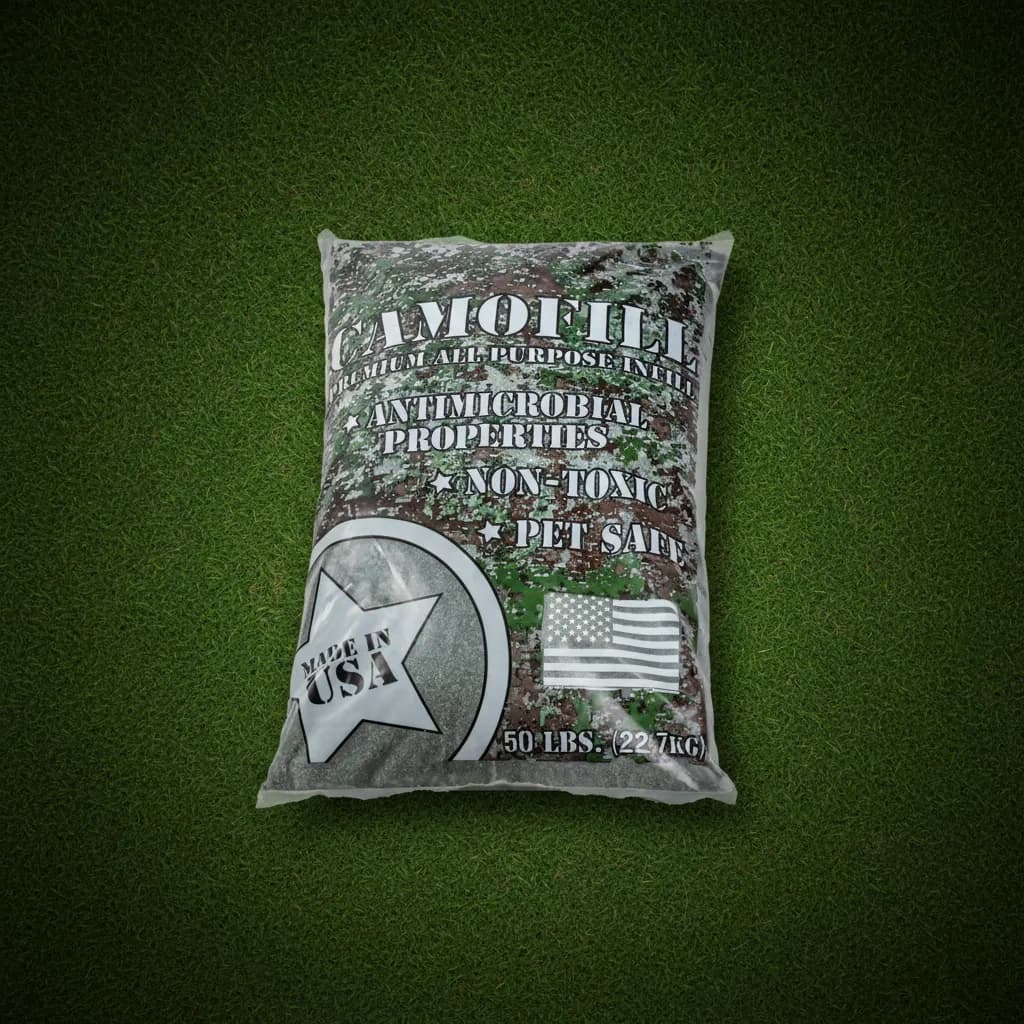
Salt is actually easier on turf than chlorine long-term. The concern is your infill — salt accumulates in low-grade sand. Use ZeoFill or coated silica (see our infill guide) and rinse the turf monthly through swim season.
Drainage Is Everything
Poolside turf gets soaked constantly. If drainage fails, you get standing water, algae, and slick surfaces that defeat the purpose.
Requirements:
- Full-flow permeable backing (60+ in/hour)
- 1–2% slope away from the pool coping
- Perimeter gravel gap to relieve edge ponding
- Consider a French drain along the low edge
Our full drainage post walks through failure modes and fixes.
Slip Safety
Wet turf is safer underfoot than wet concrete but not as slip-resistant as textured limestone. Two design moves reduce risk:
- Border the pool with a 24–36 inch strip of textured coping or non-slip pavers, then transition to turf beyond that. Feet dripping straight from the pool land on the stone; feet already dried step onto turf.
- Choose a shorter pile height (1.25–1.5") rather than luxury 2"+ pile. Shorter pile drains faster and doesn't hold water at the fiber base.
For pool safety guidelines beyond turf, the Consumer Product Safety Commission publishes the current standards for residential pool decks.
Temperature Considerations
Poolside turf sits in full sun. In hot climates (Phoenix, Vegas, Florida), untreated turf can reach 140°F+, which is uncomfortable for barefoot pool traffic.
Use:
- Cool-yarn technology (IR-reflective yarns)
- Light-colored blade blends
- ZeoFill infill (not rubber)
- A misting system if you have hot afternoon sun exposure
See our summer heat post for the full cooling playbook.
What About Rocks Under the Turf?
If your pool has decorative rock or river stone borders, don't lay turf directly over loose rock. Excavate the rock zone and build a proper base. Loose rock underneath causes the turf to sink unevenly.
Cleaning Poolside Turf
Weekly during swim season:
- Rinse with a garden hose
- Skim leaves and debris (a pool skimmer works)
- Blow off pollen and dust
Monthly:
- Enzyme cleaner if pets use the pool area — see our pet turf guide
- Check for infill displacement in high-traffic zones
Cost Range
Pool-perimeter installs are typically 200–500 sq ft (the border of an average residential pool).
- DIY: $600–1,500 for materials, plus base aggregate
- Pro install: $2,500–5,000 depending on complexity and edge detailing
Financing is available for larger integrated pool-and-deck projects.
Coordination With Pool Renovations
The best time to install poolside turf is during a pool resurfacing or deck rebuild. Everything is already torn out. Coordinate with your pool contractor and reference our installer network if they don't have a preferred turf partner.
Ready to Plan?
Order free samples — request pool-rated products with UV documentation. Use the calculator to price the yardage.