



How Long Does Artificial Turf Actually Last?
Most quality residential turf carries a 15–16 year warranty (ours is 16 — see our warranty page). Real-world lifespan with proper care usually matches or exceeds that. Some installs look great at 20 years. Others look tired at year 8.
The variables: install quality (90% of it — see our common mistakes post), use case, climate, and maintenance habits.
The 5 Signs It's Time to Replace
1. Matting That Won't Recover
Press your palm flat into the turf for 30 seconds, then lift. Fresh turf springs back within 10 seconds. End-of-life turf stays flat, showing a visible imprint for minutes.
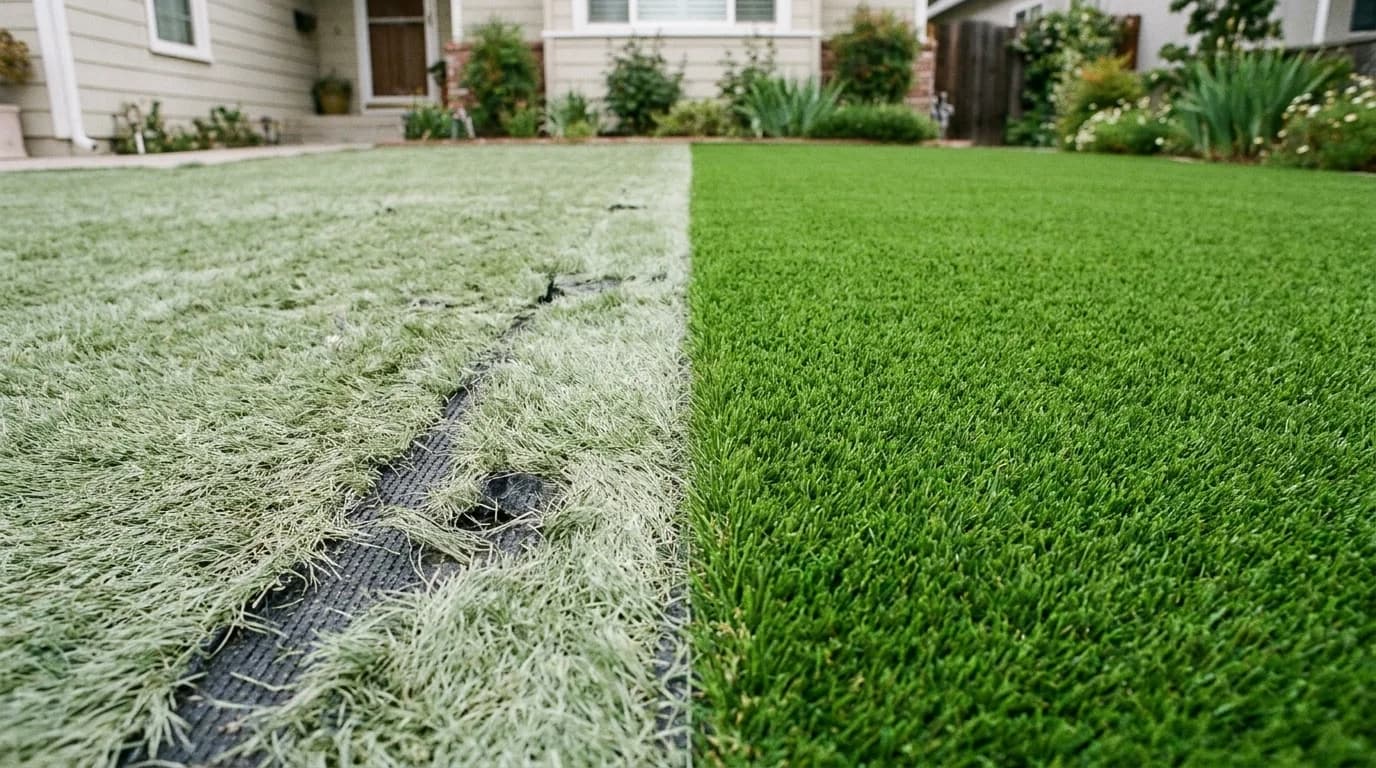
If high-traffic zones (walkways, play areas, pet runs) stay matted even after a power-brooming, the blades have lost their memory and new turf is the only fix.
2. UV Fade and Color Loss
UV exposure is the slowest killer. Quality turf is rated for 3,000+ hours of UV exposure (see our blade and color guide) but even premium product fades 10–15% over 15 years.
Signs of UV end-of-life:
- Color shifted from vibrant green to muted olive/gray
- Visibly lighter than any infill or thatch beneath
- Noticeable fade difference between shaded and sunny areas
3. Seam Separation
Seam failure is usually fixable with the patch procedure in our repair guide — but when multiple seams separate across the yard simultaneously, the adhesive has reached end-of-life throughout.
If you're patching more than 3 seams per year, replacement is cheaper than ongoing repair.
4. Drainage Failure
Properly installed turf drains 30–100 inches of rainfall per hour (see our drainage post). If puddles form after modest rain and don't drain within 15 minutes, something has clogged the backing or the base.
Causes:
- Infill has compacted and sealed drainage holes
- Pet urine salts have crystallized in the fiber base
- Fines have washed into the sub-base
Try power-brooming aggressively and flushing with water first. If drainage doesn't recover, the install is at end-of-life.
5. Backing Breakdown
Flip up a corner of the turf and inspect the backing. End-of-life backing looks:
- Brittle and cracking
- Visibly thinner or torn at nail points
- Chalky or crumbling to the touch
Polyurethane backings last the longest. Latex backings fail earliest, often in year 10–12. The Synthetic Turf Council publishes backing lifespan expectations by material type.
Warranty Considerations
Before you order replacement, check your warranty. Ours covers manufacturing defects, UV fade beyond spec, and backing failure within 16 years — see the warranty page for exact terms. Document any failure with photos and the original purchase/install records before contacting us.
If the install is under 10 years old and showing end-of-life signs, you likely have a warranty claim rather than a replacement project.
Partial vs. Full Replacement
Depending on what's failing:
- One zone matted: replace that section only (see repair guide)
- Pet area shot but rest fine: replace the pet area with pet-specific turf (see pet turf guide)
- Half the yard uniformly aged, half still OK: usually easier to replace the whole thing — color matching ages 15 years aren't going to blend
- Full yard end-of-life: full replacement
Full replacements are often faster than the original install because the sub-base is already there. If the base is still sound (compact, drains, slope intact), budget 40–50% less than the original project cost.
The Cost of Delaying Replacement
End-of-life turf isn't just ugly — it's a trip and fall hazard, it traps moisture (growing mold near shaded zones per our shaded yards post), and it tanks property aesthetics. For homes being prepped for sale, pre-sale turf replacement typically pays back 1.5–2x at closing in drought-prone markets (see our financing/ROI post).
Recycling the Old Turf
Modern polyethylene turf is recyclable. The EPA Sustainable Materials Management program covers the pathways. Many metros have specialty recyclers that accept rolled-up old turf — our contact page can connect you to one in your region.
Never landfill it if a recycling option is available locally.
Planning Your Replacement
- Document the failure (photos, dates)
- Check warranty coverage
- Order new samples — technology has improved substantially in 15 years
- Use the calculator with the new product
- Decide DIY vs pro — see our installer vetting guide
Financing is available if your original install was a decade-plus ago and the cash timing is tight.