


Turf Is Safer Than Grass — With One Big Caveat
For soft landings, artificial turf on the right shock pad significantly outperforms natural grass, wood chips, or pea gravel. Without a pad, though, turf on hard ground is no safer than a concrete slab. The difference between the two is engineering, not aesthetics.
The One Metric That Matters: Fall Height
Playground safety is rated by critical fall height — the maximum drop from which a child can fall without a serious head injury. It's measured under ASTM F1292 and certified by the International Play Equipment Manufacturers Association (IPEMA).
Fall height is a function of:
- Impact-attenuating surface (the shock pad)
- Surface thickness
- Base rigidity underneath
Typical shock pad configurations:
- 1" pad = 4–5 ft critical fall height
- 1.5" pad = 6–8 ft critical fall height
- 2" pad = 10+ ft critical fall height
Match the pad thickness to your tallest play structure element.
Anatomy of a Kid-Safe Turf System
Layer 1 — Sub-base: 3–4 inches of compacted Class II base with 1–2% slope for drainage. Same as any turf install. See our drainage guide for base construction.
Layer 2 — Shock pad: Closed-cell foam panels, typically 1–2 inches thick. Sized to cover the "use zone" of every play structure — usually a 6-foot radius around swings, slides, and climbers.
Layer 3 — Playground turf: Look for 80+ oz face weight and 3/4" to 1.5" pile height. Longer blades trap more infill and protect the pad.
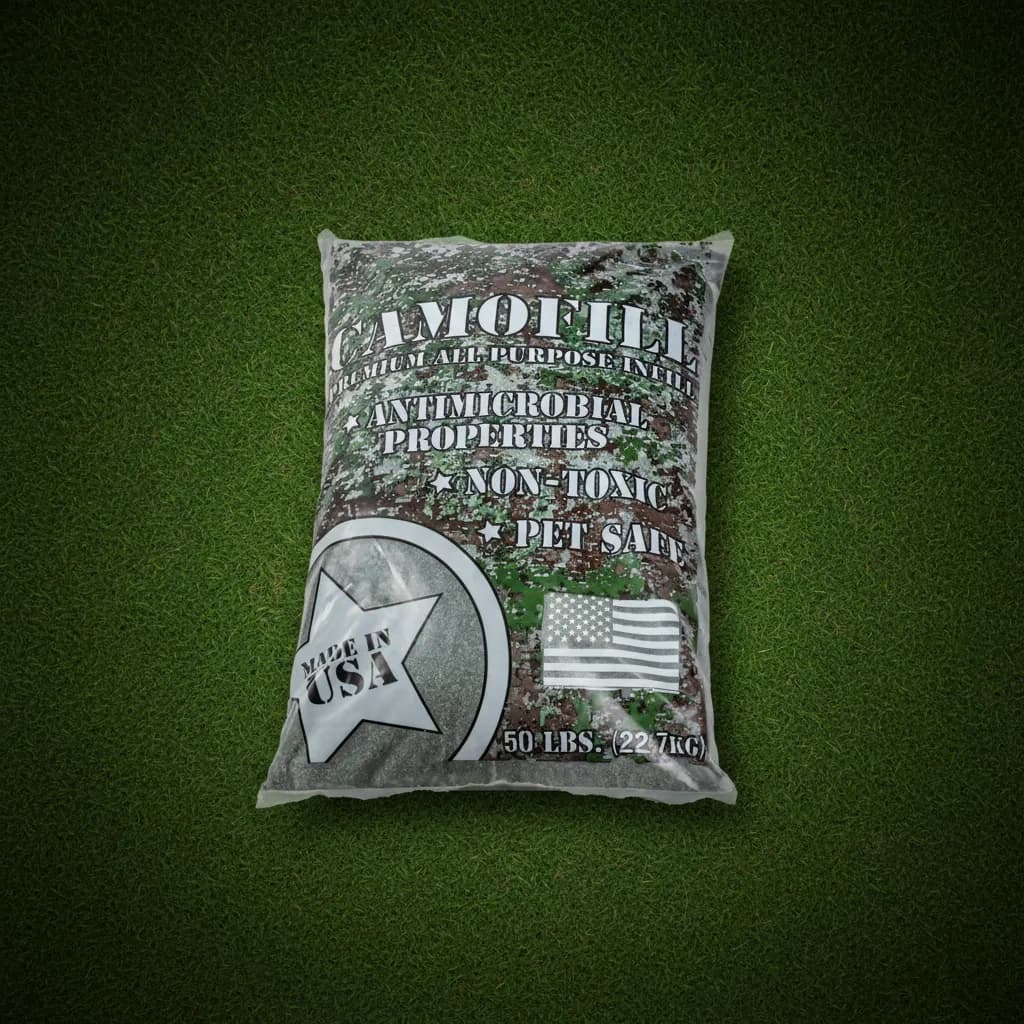
Layer 4 — Silica infill (not rubber). For playground applications, silica sand is preferred over crumb rubber, which has come under safety scrutiny in recent years. The CDC ATSDR publishes the latest safety guidance.
What About Trampolines and Bouncy Houses?
- Trampoline legs go directly on turf — no pad needed under the frame. Add a pad only under the fall zone around the trampoline if you don't have a safety net enclosure.
- Bouncy houses are fine on turf but avoid stakes. Use sandbag anchors instead.
- Slip-and-slides work great on turf. Rinse afterward to prevent soap residue from clogging drainage.
Heat and Kids
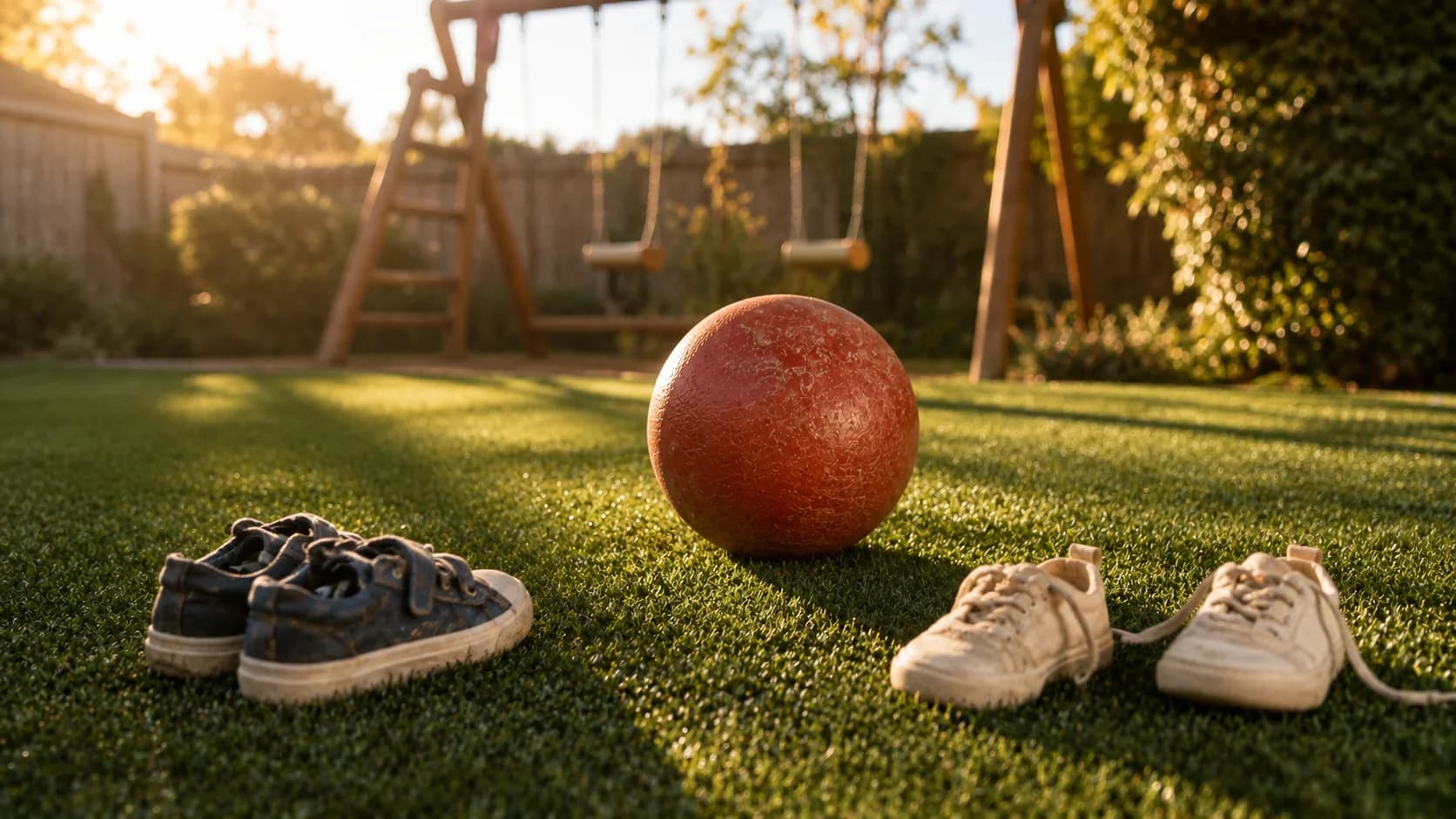
Barefoot kids will feel hot turf faster than adults. Follow the strategies in our summer heat post — cool-yarn products, misting, and shade cover the play zone whenever possible.
Pet + Kids Zones
If your kids play where the dog also relieves itself, upgrade to a pet-grade turf with antimicrobial backing and ZeoFill infill. Details in our pet turf guide.
Splinters, Bugs, and Allergies
Three under-appreciated benefits of turf over natural grass:
- No wood chips = no splinters
- No standing organic matter = fewer ticks, fleas, and fire ants
- No grass pollen = fewer allergy flareups per AAAAI guidance
Warranty for Play Areas
Our standard 16-year warranty covers residential play-zone use. Commercial daycares and playgrounds should ask about extended commercial warranties via our broker team.
Ready to Design a Safe Play Zone?
Order free samples — we'll include playground-grade options in your kit. Or use the calculator to price a full play-safe system including shock pad and infill.