






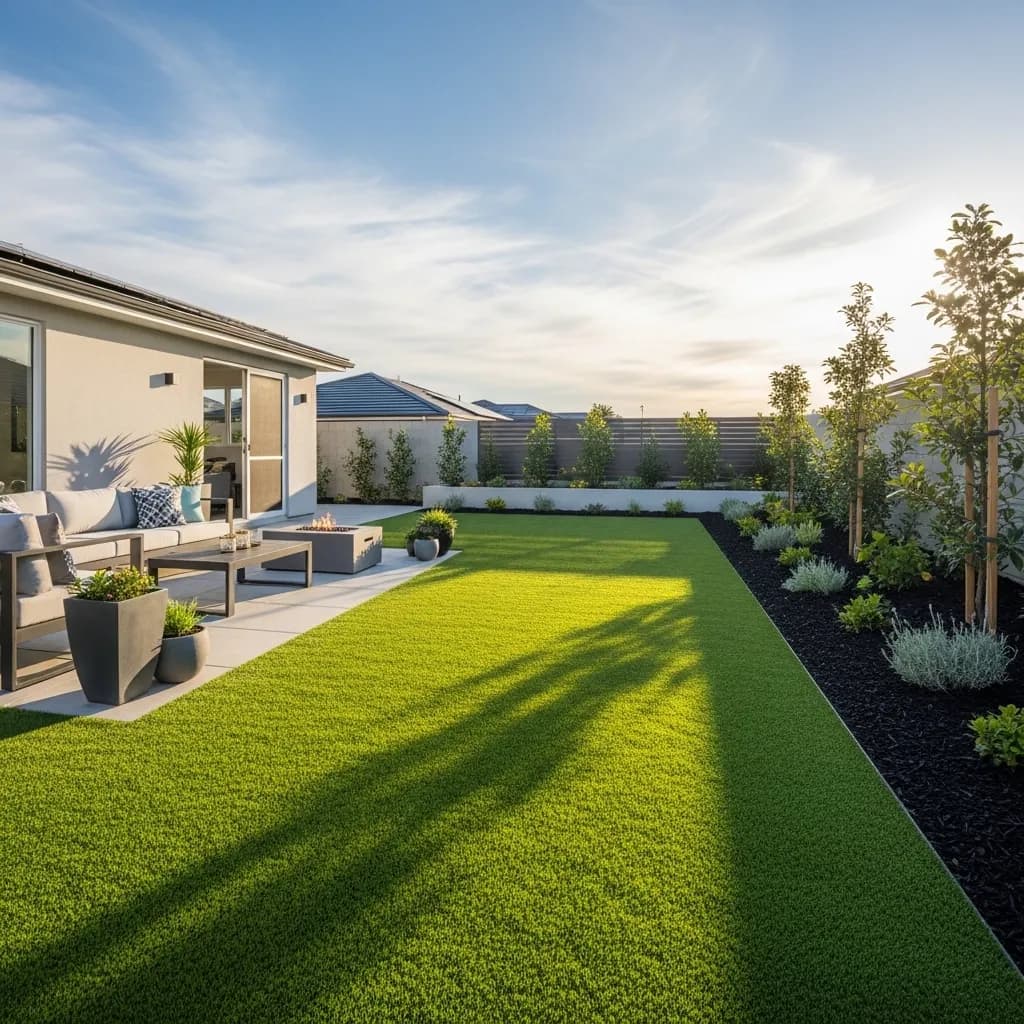


Why Slopes Are Different
Standard turf installations assume a mostly flat substrate with 1–2% drainage slope. Hillsides and seriously sloped yards (anything over 10% grade) break those assumptions.
Three unique challenges:
- Base compaction is harder — equipment slides, slopes resist uniform density
- Erosion can wash out the sub-base during heavy rain before the turf is anchored
- Anchoring needs more nails/pins at closer intervals so turf doesn't slip downhill
Done right, sloped turf is spectacular — low-maintenance green cascading down a hillside with zero mowing and zero mud. Done wrong, you're looking at expensive remediation within 2 years.
Grades and What They Mean
- Under 5%: essentially flat, standard install procedure
- 5–10%: mild slope, slightly tighter nail spacing
- 10–20%: moderate slope, requires special attention
- 20–33%: steep slope, often requires terracing or crosswise seams
- Over 33%: very steep, usually requires full terracing or retaining walls
Measure your slope by rise over run. A 10-foot run with a 2-foot rise = 20% grade.
When Terracing Makes Sense
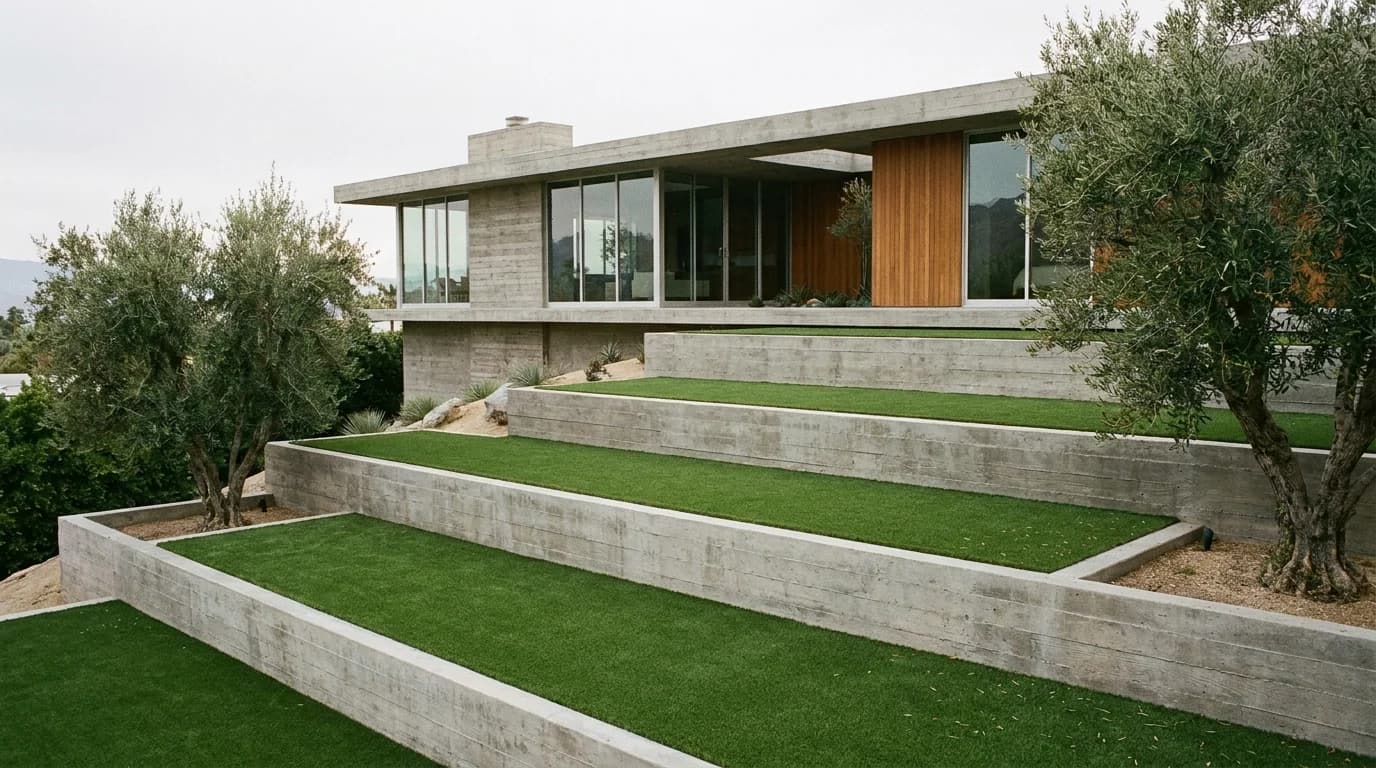
For slopes over 20%, consider breaking the hillside into flat terraces separated by low retaining walls. Each terrace becomes a conventional flat install, and water cascades predictably from one level to the next.
Terrace design principles:
- Retaining walls typically 18–30 inches tall
- Each terrace 6–12 feet wide
- Drain each terrace independently to a hillside drain or French drain
- Follow the ASCE grading and erosion control standards your local jurisdiction references
Base Prep for Non-Terraced Slopes
If you're going to turf a continuous slope without terracing:
- Install erosion-control fabric (coir matting or jute) over the native soil during excavation
- Place woven weed barrier on top of the native soil (see our weed prevention post)
- Build base in 2-inch lifts rather than one 3-inch pour — compact between each lift
- Compact perpendicular to the slope (across, not up/down) for consistent density
- Add a drain channel at the toe of the slope to catch runoff
Anchoring Turf on Slopes
Standard flat install: perimeter nails every 6 inches. On slopes:
- 5–10% grade: perimeter every 4 inches, field pins every 2 feet
- 10–20% grade: perimeter every 3 inches, field pins every 18 inches
- 20%+ grade: perimeter every 3 inches, field pins every 12 inches, consider stainless steel pins instead of galvanized nails for long-term holding
Nail/pin heads should sit flush — recessed into the backing. If they protrude, infill rolls downhill and exposes them.
Seam Orientation on Slopes
Always run seams PARALLEL to the slope direction, never across it. Cross-slope seams act as water dams and lift under rain. Parallel seams let water sheet down the slope naturally.
For wide hillsides, you'll have seams every 15 feet (standard roll width). Plan the layout before cutting.
Drainage on Slopes
Water accelerates downhill. Standard turf drainage (which handles 30–100 inches/hour of rain per our drainage post) is more than enough — the issue isn't water through the backing, it's water running across the surface and gathering debris at the toe.
Install:
- A channel drain at the base of the slope
- French drain behind retaining walls
- Scuppers through any wall sections to prevent trapped water
Erosion During Construction
The 48 hours between excavation and turf install is the dangerous window. If a storm hits, you can lose your base. Mitigation:
- Check the NOAA weather forecast before scheduling excavation
- Keep the project under 48 hours from excavation to turf laydown
- If weather delays occur, cover exposed base with heavy plastic weighted at the edges
When to Use Pro Installers
Slope installs over 15% grade are a professional-only job for most homeowners. The equipment demands (hillside-rated compactors, specialty pins, erosion fabric management) and the physical demands make it a bad DIY candidate.
See our installer network for hillside-experienced crews. Our installer vetting guide covers the specific questions to ask about slope experience.
Design Ideas for Hillsides
- Full-field cascade: continuous turf down the slope, bordered by stone pathways
- Terraced levels: multiple flat zones, each a different use (lounge, play, garden)
- Retaining-wall caps: turf capping low walls for a soft green edge
- Mixed hardscape and turf: paver pathways winding through turf-covered contours
Ready to Plan?
Measure your slope and use the calculator for materials (add 15% waste factor for hillside cuts). Order samples to compare colors in your hillside's actual lighting conditions.