






Why Most Turf Problems Aren't the Turf's Fault
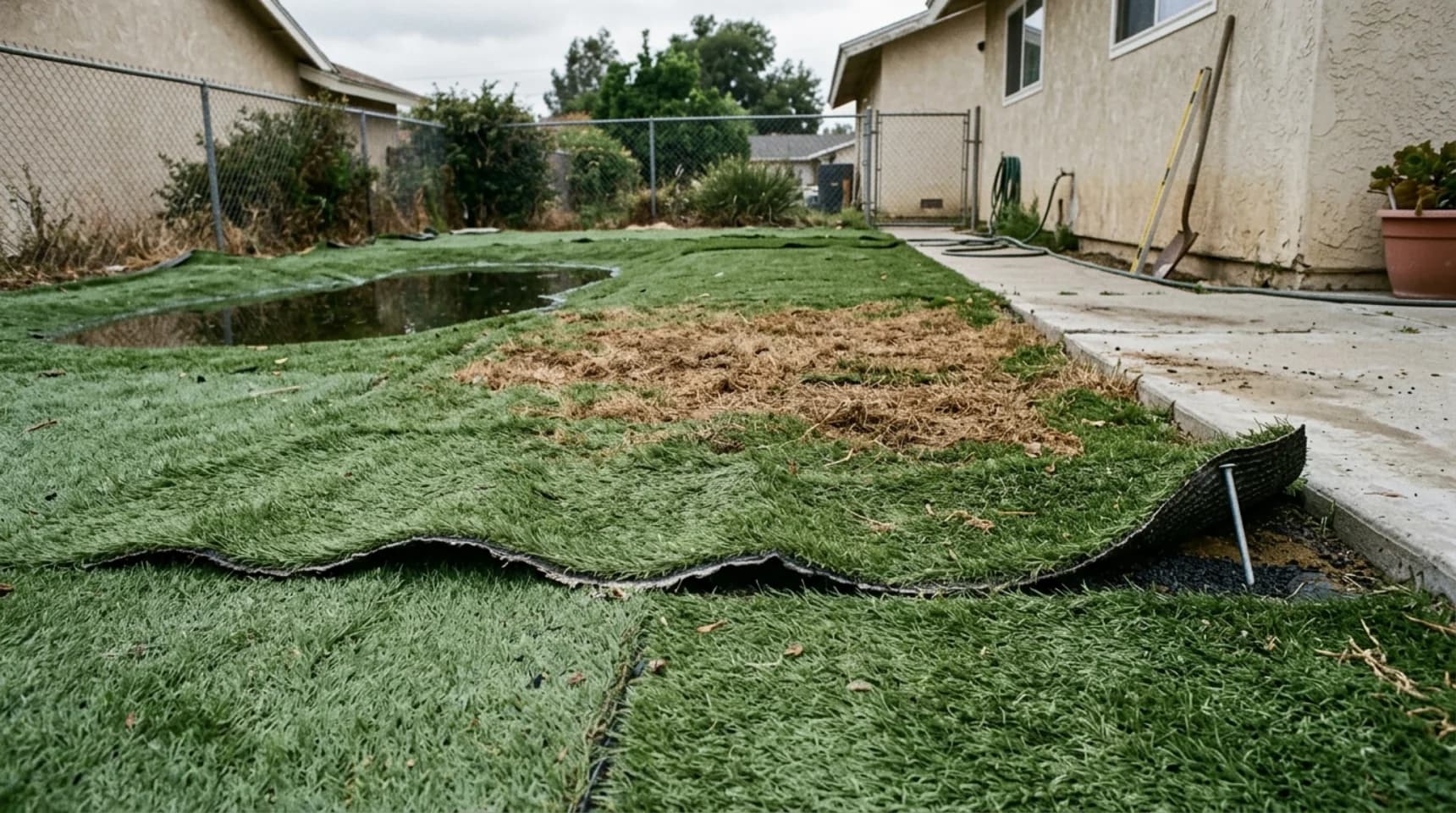
We hear it constantly: "my turf failed after two years." Nine times out of ten, the turf is fine. The base failed, the seams weren't taped, or the drainage was ignored. Here are the 10 mistakes we see most often — in rough order of frequency.
1. Skipping Base Compaction
The mistake: Rolling out turf on loose or under-compacted aggregate. The result is uneven settling within months — waves, dips, pooling water.
The fix: Compact your base to 95%+ density with a plate compactor. Do it in two passes, watering lightly between passes. Full base-prep procedure in our complete installation guide.
2. No Slope for Drainage
The mistake: Grading the base flat because "the turf drains through the backing."
The fix: Establish a 1–2% slope away from your home during base construction. Water still needs somewhere to go after passing through the backing. See our drainage 101 post.
3. Wrong Turf for the Use Case
The mistake: Buying a 60 oz landscape turf and expecting it to survive a large dog run, or spec'ing a pet turf for a putting green.
The fix: Match the product to the use. Our category posts break this down:
4. Wrong Grain Direction on Seams
The mistake: Two turf pieces installed with the blade grain pointing in opposite directions. The seam becomes a visible dark stripe from every angle.
The fix: Every roll has a "grain" printed on the backing. All pieces must face the same direction. Best practice: grain points toward the primary viewing angle (usually the house).
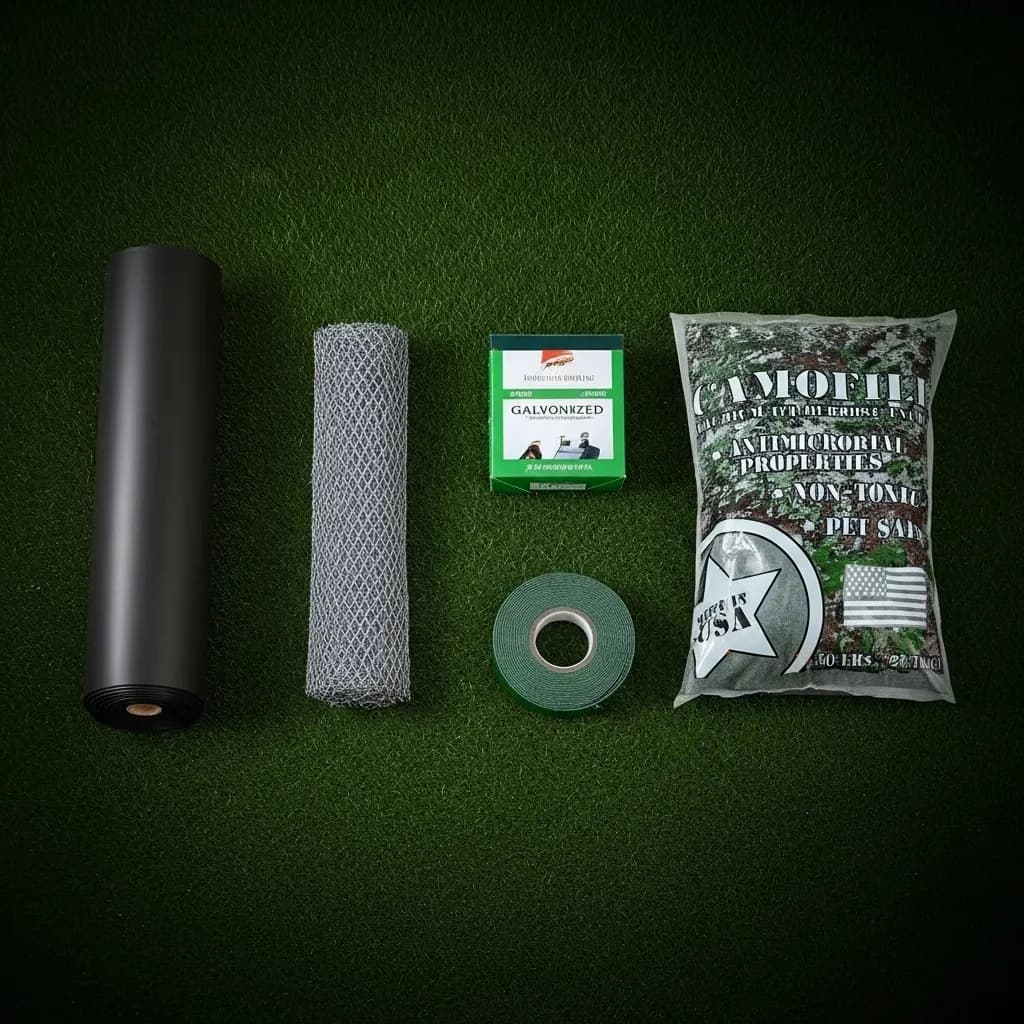
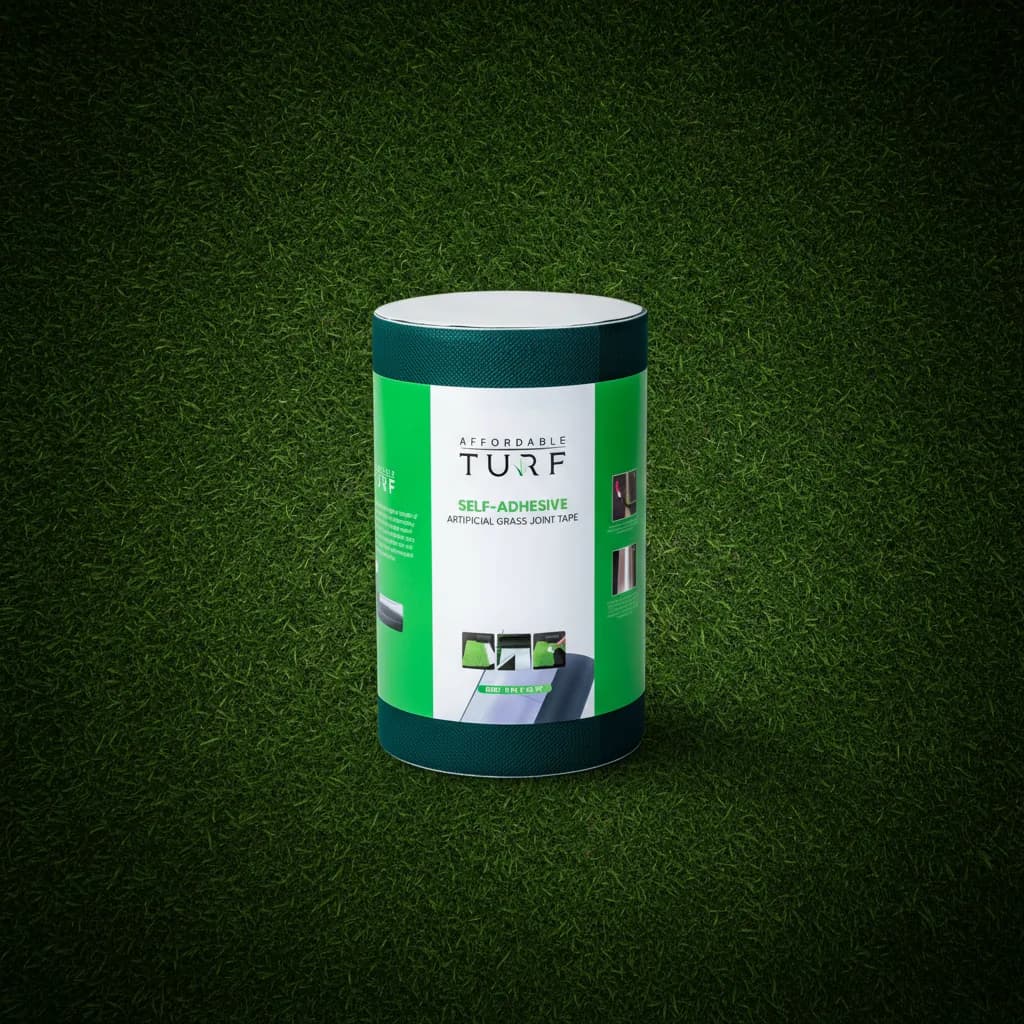
5. Cheaping Out on Seaming Tape and Glue
The mistake: Using duct tape or landscape adhesive on seams because "it's cheaper."
The fix: Use industry-standard turf seam tape and polyurethane adhesive. Anything else fails within a season. Full pro procedures published by the Synthetic Turf Council are worth reading before your install.
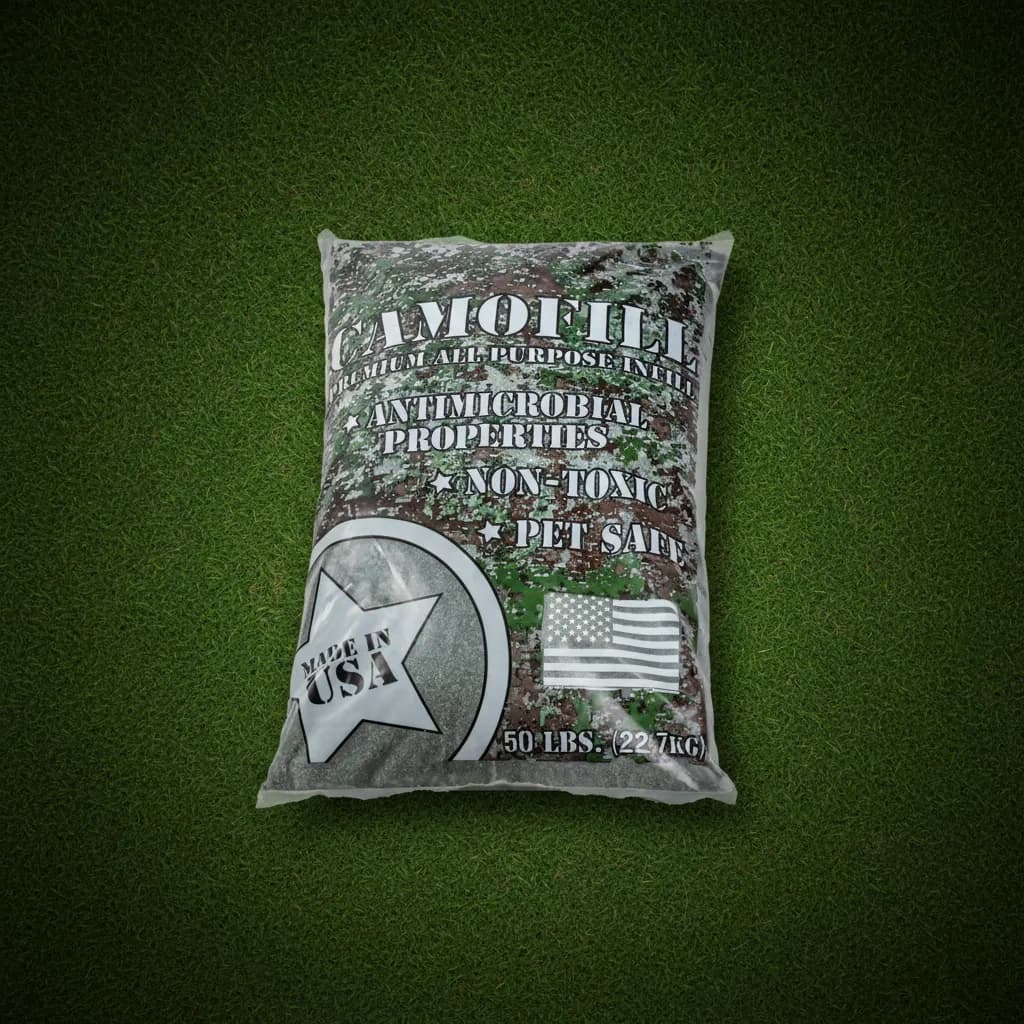
6. Not Enough Infill
The mistake: Applying 0.5 lbs/sq ft of infill because it looks like enough visually.
The fix: Landscape turf needs 1.5–2 lbs/sq ft. Sport and playground turf needs 3+ lbs/sq ft. Without proper infill, blades flatten permanently within months. See our infill guide for exact quantities by turf type.
7. Nailing Too Sparse on the Perimeter
The mistake: Nailing the perimeter every 12 inches or wider because "it's holding fine."
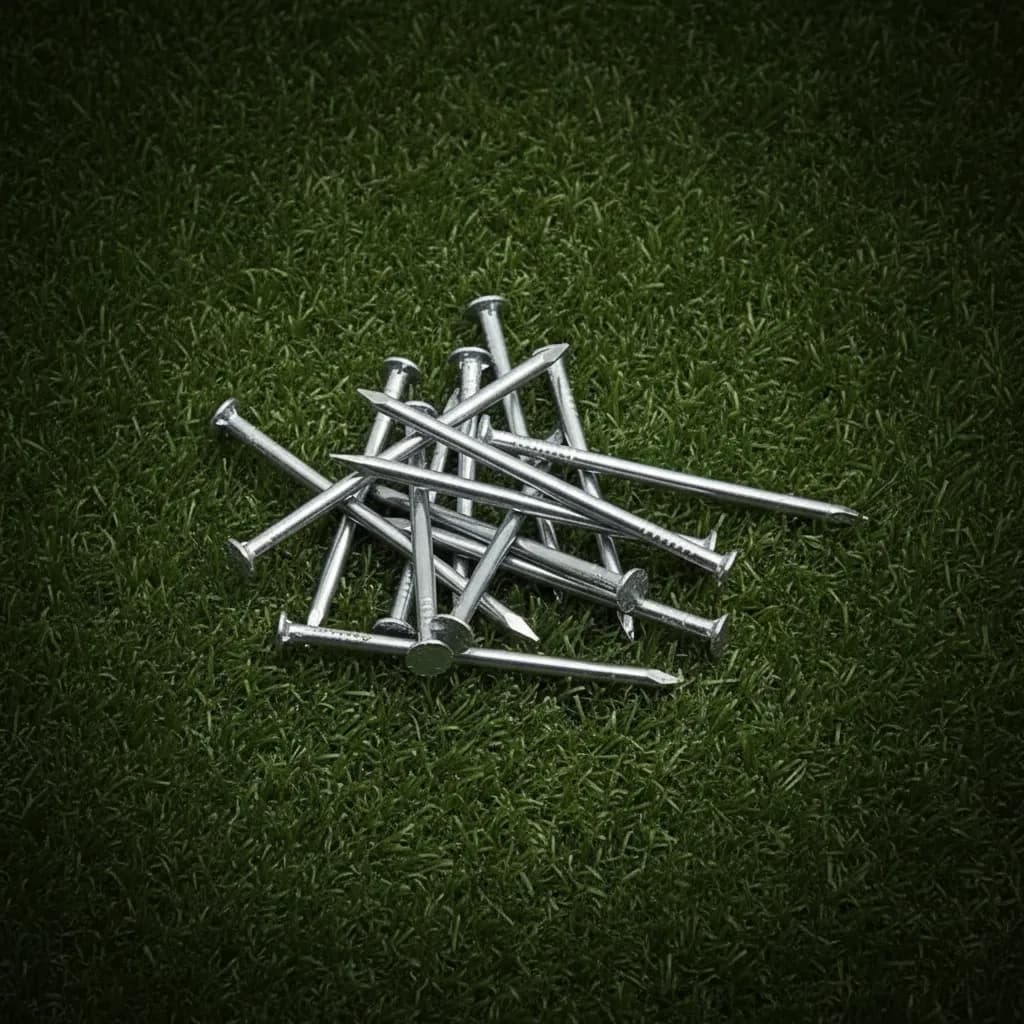
The fix: Perimeter nails every 6 inches with 5" galvanized landscape nails. The perimeter is where wind lifts turf. Sparse nails guarantee eventual edge lifting.
8. Ignoring Organic Debris in the Base
The mistake: Leaving stumps, roots, or leaf litter underneath the base fabric because "it'll compost and disappear."
The fix: Fully clear the excavation. Organic matter under turf decomposes over 6–18 months and creates sinkholes as the material collapses. Compost it elsewhere (see our conversion guide or the EPA composting page) — never bury it.
9. Installing on Wet Base
The mistake: Compacting and installing on a rain-soaked base because "the deadline can't slip."
The fix: Wait. Wet base = failed compaction = future settling. The NOAA Climate Prediction Center publishes 6–10 day outlooks that let you schedule around wet weather. Our spring install timeline builds in weather buffers.
10. Skipping the Power-Broom
The mistake: Installing infill by hand-brooming and calling it done.
The fix: Power-broom in 3 light passes after infill application. This works the infill down between the blades and lifts the fibers upright. Without it, you'll have flat, matted turf within a season.
Bonus Mistake: Not Reading the Warranty
Most turf warranties (including our 16-year warranty) require proper installation to be valid. Rent a power broom, use the right seam tape, compact your base — and register the install. Skipping these steps voids coverage.
The Cost of Doing It Wrong
Fixing a failed install typically means removing everything and starting over. A $12,000 install can become a $24,000 problem if the base failed. Take an extra day on prep — it saves 15 years of regret.
Ready to Do It Right?
Order free samples with our installation guide included. Use the calculator for accurate quantities. If DIY isn't your thing, our installer network covers most major metros.