









Why Weeds Grow Through Turf
Artificial turf blocks almost all sunlight at the soil level. In theory, nothing should grow. In practice, three things let weeds through:
- Cheap weed barrier fabric that breaks down in 2–3 years
- Base aggregate contaminated with topsoil or organic matter that carries dormant seeds
- Perimeter gaps where turf meets planters, hardscape, or landscape beds — weeds grow sideways under the edge
Address all three during install and you'll have a weed-free lawn for 15+ years.
The Right Weed Barrier Fabric
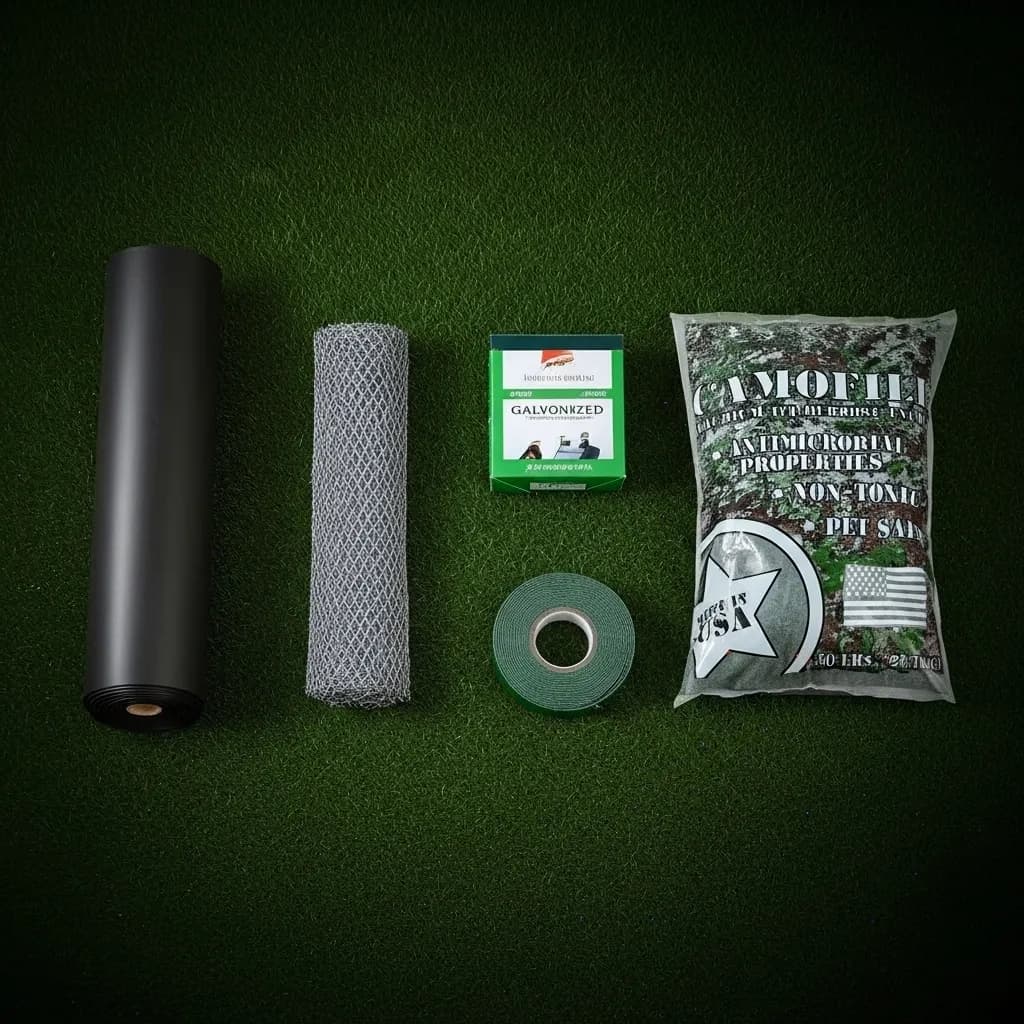
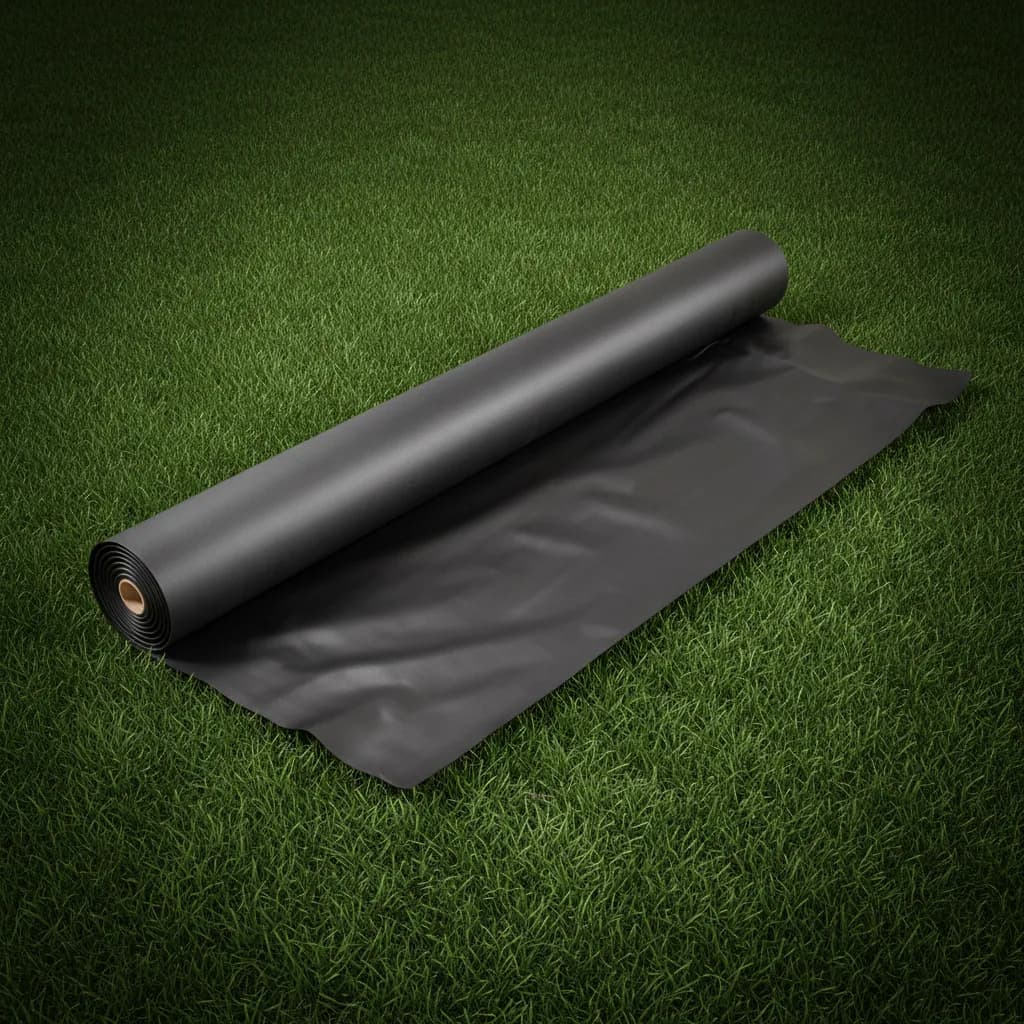
Not all landscape fabric is equal. Look for:
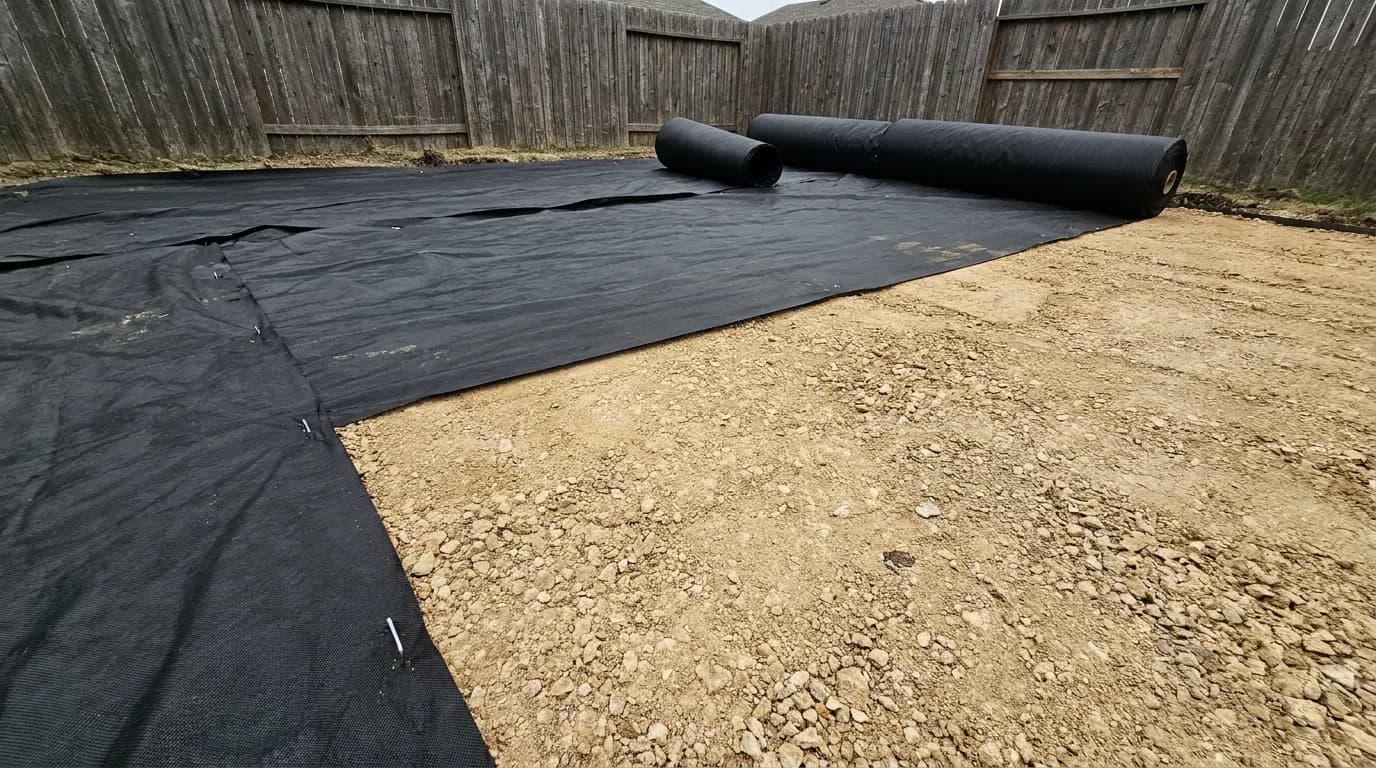
- Woven polypropylene (not spun/non-woven) — resists tearing
- 4+ oz weight — thin fabrics tear during base compaction
- UV stabilized — important if any edges will be briefly exposed during install
The cheap landscape fabric at big-box stores is typically spun 1–2 oz non-woven. It fails within 2 seasons. Our supplies page stocks the heavy woven barrier used by pro installers.
Base Prep That Blocks Weeds
Your 3–4 inch crushed-stone base does more than drain water. Done right, it's a physical barrier that denies seeds the soil contact they need.
Required steps (full details in our complete installation guide):
- Strip existing sod completely — 2 inches minimum. Compost removed sod elsewhere; see the EPA home composting guide for the right way to handle it.
- Lay woven weed barrier over the native soil
- Add 3–4 inches of clean Class II road base (ask the supplier — "clean" means no fines, no organic contamination)
- Compact to 95%+ density with a plate compactor
Any shortcut here means weeds. Specifically: skipping the barrier, using contaminated base material from a questionable supplier, or under-compacting.
Perimeter Sealing
The #1 real-world weed entry point isn't through the turf — it's around the edges where turf meets planter beds, patios, or driveways.
Techniques that work:
- Steel landscape edging installed vertically to full base depth creates a physical barrier
- Concrete mowing strip poured along the perimeter before turf install
- Buried paver edge — a line of pavers set deep so weeds can't creep sideways
Lazy perimeters (just nailing turf flush against a flowerbed) invite grass and weeds to migrate under the turf from the planter. Within one growing season, you'll see tufts coming up through your turf 6–12 inches from the edge.
For broader integrated pest management guidance, the EPA IPM program is the standard reference.
Spot-Treating Weeds That Appear
Even perfect installs occasionally see a stray weed come through where a pet or kid tracked soil onto the turf and a seed germinated in the infill.
Safe approach:
- Pull by hand while small (easier before roots establish)
- Spot-treat with a vinegar-based weed killer (horticultural vinegar at 20% acetic acid works for most broadleaf weeds)
- Avoid glyphosate — it stains some turf fibers and the risk-benefit for a single weed isn't worth it
Don't:
- Use pre-emergent granules on turf — they can discolor light-colored infill
- Pressure-wash to remove weeds — damages fiber
Fall and Spring Maintenance
Weed seeds blow in year-round, especially in fall. Simple preventive maintenance:
- Fall: blow debris off and check perimeter edges — see our fall cleanup post
- Spring: walk the perimeter, pull any new sprouts before they establish
- Monthly during growing season: hose rinse to flush seeds out of the infill
When Weeds Mean a Bigger Problem
A sudden explosion of weeds through the field (not just perimeter) usually means:
- The weed barrier has failed (torn or decomposed)
- The base is contaminated with organic matter
- The install skipped the barrier entirely
Fixing it requires lifting the turf, replacing the barrier, and reinstalling. Our installer network handles these remediation jobs.
Starting Fresh?
Spec the install right from day one. Order free samples, use the calculator for materials including barrier fabric, and reference the complete installation guide for base construction.